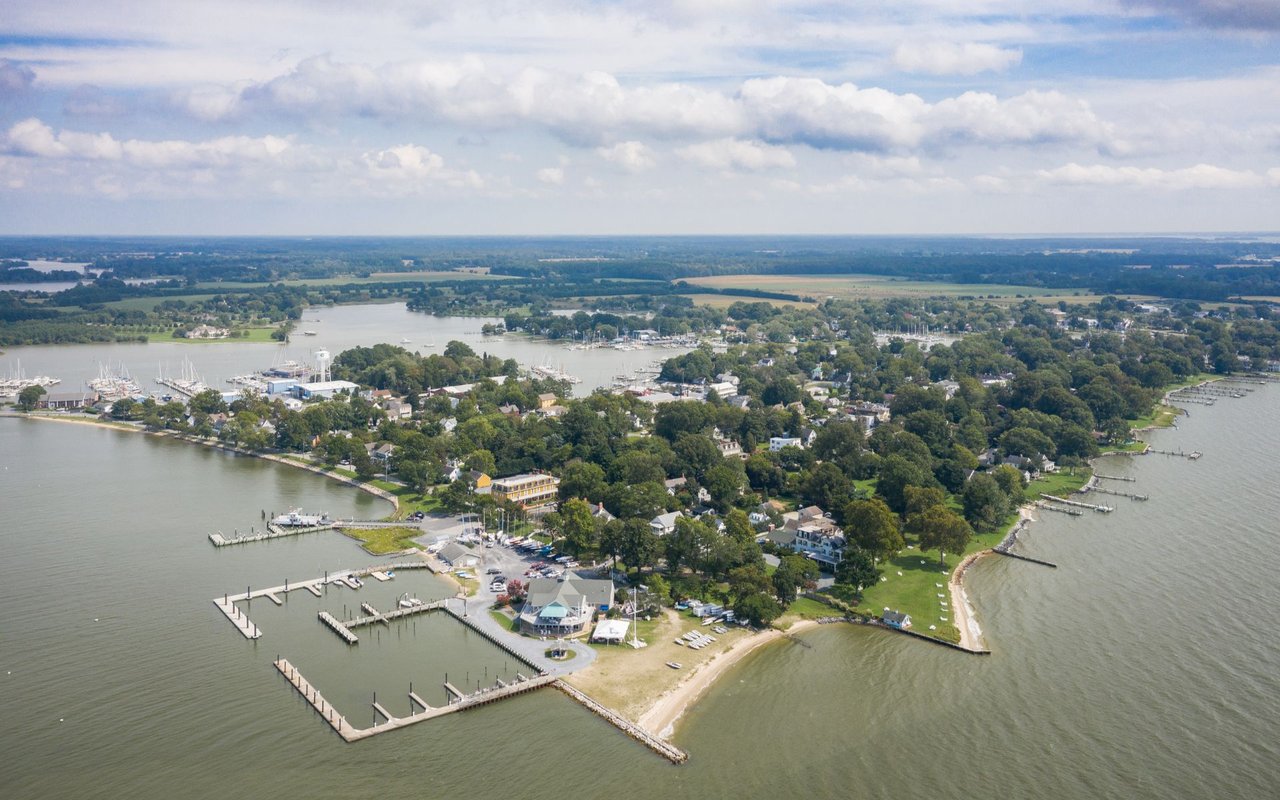
Welcome to
1,195 people live in Oxford, where the median age is 65.6 and the average individual income is $61,133. Data provided by the U.S. Census Bureau.
Total Population
Median Age
Population Density
Average individual Income
Oxford is a peninsula of roughly 700 people sitting where the Tred Avon River meets the Choptank, and almost everything about the town follows from that geography. The water is on three sides. The main road in — MD-333 — is also the main road out. The commercial core is about two blocks long. What Oxford lacks in size, it makes up for in one of the deepest, best-protected natural harbors on the Chesapeake and a continuous settlement history going back to 1683.
For buyers, that combination produces a very particular market. Oxford is not a place where you shop from a long list of options. It is a place where a handful of homes trade each year, where a well-priced waterfront property can go under contract before it makes it into a weekend showing schedule, and where the difference between two houses a quarter-mile apart can be measured in feet of water depth at low tide and inches of finished-floor elevation above base flood.
This guide walks through what that market actually looks like — pricing, housing stock, the specific waters and streets, the boating infrastructure, the schools, and the real annual cost of ownership. It is written for people seriously considering a purchase here, not for people browsing.
Median listing prices in Oxford generally sit in the $1.2M to $1.3M range, while typical home values across the whole town — including modest inland properties — average closer to $890,000. That gap tells you something important: the listings that come to market skew heavily toward waterfront and updated historic homes, while a quieter inventory of inland ranch and cottage properties trades in the $400,000 to $600,000 band without generating headlines. Premier waterfront estates move past $3M to $4M+.
Inventory is the defining constraint. Active listings routinely sit in the single digits or low teens for the entire town. This is not a seasonal dip — it is structural. Oxford is a finite peninsula inside a historic district, with no meaningful new subdivision capacity. Properties here are tightly held, often across generations, and turnover is slow by choice rather than by market weakness.
Days on market average 30 to 60 days, though that average is misleading. Turnkey waterfront and well-restored historic homes move considerably faster; properties needing structural work, dock repair, or historic-compliant renovation sit longer while buyers price out the scope. If you are shopping the top of the market, be prepared to act on a first showing.
The factor buyers most often underestimate is regulatory. Because the town is surrounded by the Tred Avon and Town Creek, FEMA flood zone designation and Maryland Critical Area building restrictions materially affect both value and what you can do with a property after closing. Two houses with identical square footage can carry wildly different insurance costs and renovation potential depending on foundation type, elevation, and how much impervious surface already exists on the lot. This is a market where the flood determination and the Critical Area buffer map deserve as much attention as the inspection report.
Oxford's housing stock breaks into four fairly clean categories, and knowing which one you're shopping shapes everything from financing to insurance to contractor availability.
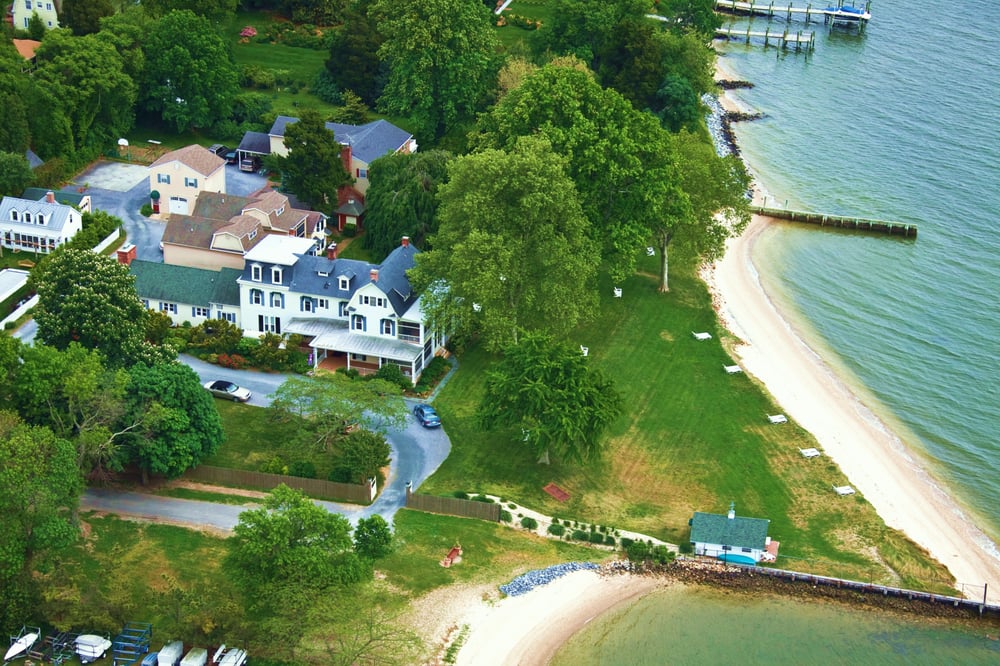
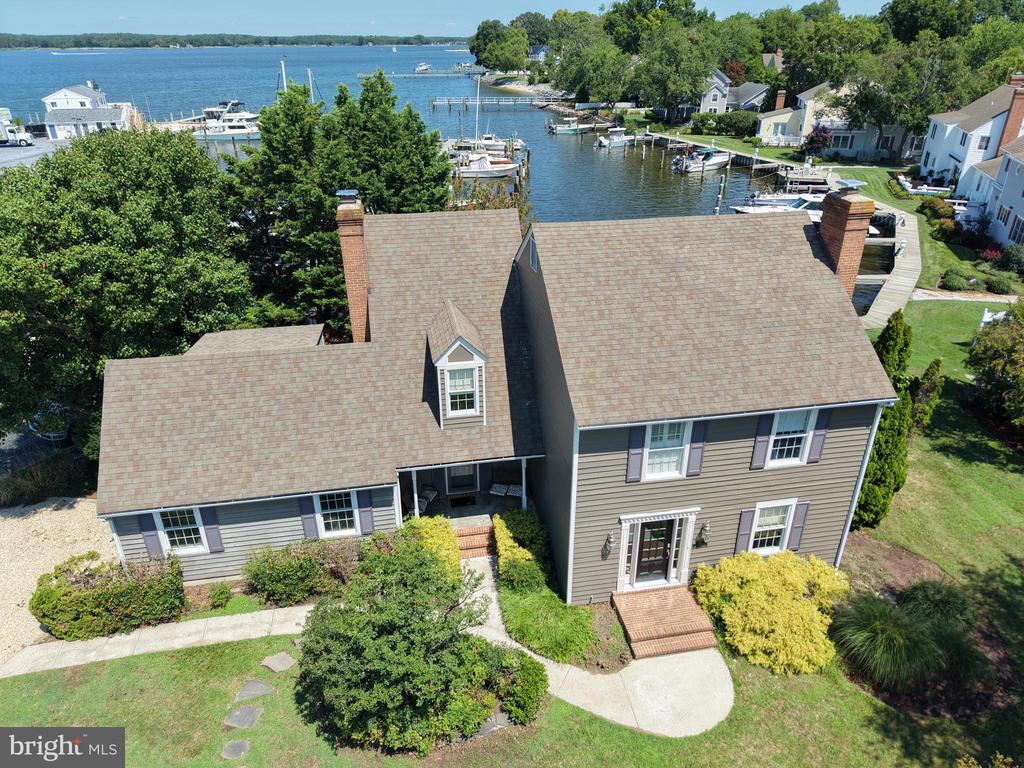
Waterfront estates and custom homes ($1.5M to $4M+) are the substantial single-family properties along the Tred Avon River and Boone Creek. Expect private deep-water docks, wrap-around porches, mature landscaping, and west-facing sunset exposure. These are frequently purpose-built or heavily rebuilt for waterfront living, with pilings foundations, boat lifts, and rip-rapped shorelines.
Historic village cottages and Victorian houses ($600,000 to $1.5M) sit in the walkable Historic District. Built between the late 1700s and early 1900s, they offer original Eastern Shore architecture, exposed timber and wide-plank pine, and the ability to walk to the ferry landing, the town park, and the ice cream stand. Small lots, meticulous streetscapes, and — importantly — Historic Commission oversight on exterior work.
Mid-century and ranch-style single-family homes ($400,000 to $750,000) are the town's practical inventory. Inland or set back from the water, these offer single-story living, real yard space, and a low-maintenance footprint. This is where full-time residents who aren't buying a waterfront trophy tend to land, and it's the segment most often overlooked by out-of-town buyers.
Waterfront building lots ($150,000 to $1.9M, depending on acreage and frontage) come up occasionally, sometimes with perc approvals or existing bulkhead in place. These are for buyers with patience and a builder they trust — Critical Area rules, setback requirements, and elevation mandates will shape the design before an architect draws a line.
Oxford was one of Maryland's original colonial ports, and its Historic District contains one of the densest concentrations of preserved 18th- and 19th-century architecture on the Eastern Shore. The core runs along North and South Morris Street and The Strand, and the housing there falls into three recognizable groups.
Colonial and timber-frame cottages are the oldest — compact 1½-story frame structures from the late 1700s, with steep wood-shingle roofs, hand-cut timbering, central chimneys, and side-hall layouts. The Barnaby House (c. 1770) is the reference point locals use when describing this type.
Victorian and Federal residences date to the mid-to-late 19th century and read very differently: decorative gingerbread trim, deep wrap-around porches, high ceilings, and distinct brick hearths. These tend to offer more usable square footage than the colonial cottages and are the more common choice for buyers wanting historic character without a compact floor plan.
Converted maritime properties are Oxford's most interesting category — former ship captains' quarters, an old bank, general stores — repurposed into residences or boutique guest quarters. These come with quirks and stories in roughly equal measure.
Across all three, expect original wide-plank pine floors, small landscaped town lots, and in many cases historic preservation easements attached to the deed. Walkability is the real amenity here: the ferry landing, the parks, and the shops are minutes on foot. Price range runs $600,000 to $1.8M, driven primarily by the extent of structural and systems updates, interior square footage, and how close the house sits to the water.
One practical note from experience: buyers who fall in love with a historic Oxford house should get comfortable with the Historic Commission process before going under contract. Custom wood trim, historic paint palettes, and specialized tradeswork are not optional line items — they are the cost of ownership in this district, and they take time to schedule.
Because Oxford sits on a narrow peninsula, waterfront here isn't a single category — it's three distinct ones, and the body of water in front of the house determines the view, the boat you can keep, the wind exposure, and the shoreline maintenance bill.
Body of Water | Setting | Boating & Dockage | Typical Value Range |
|---|---|---|---|
Tred Avon River | Broad, open-water vistas with west-facing sunset views. Luxury compounds and custom estates along The Strand and Ferry Neck, often with rip-rapped shorelines. | Deep-water access, frequently 5'+ MLW. Suits large sailboats and deep-draft power yachts; private piers and boat lifts common. | $2M to $4.5M+ |
Town Creek | Sheltered, calm basin wrapping the eastern edge of the village. Quieter, protected, noticeably lower wind exposure. | Protected mooring with shallow-to-mid draft docks. Ideal for powerboats, skiffs, kayaks. | $1.2M to $2.8M |
Choptank River | Expansive, bay-like views south toward the main channel. Larger lot sizes near Benoni Point and the outer boundaries. | Variable draft depths. Exposed shoreline demands serious bulkhead and coastal protection maintenance. | $1.5M to $3.5M |
The honest tradeoff: Tred Avon frontage buys you the views and the boat capacity, but you pay for exposure in shoreline upkeep and premium pricing. Town Creek buys you protection and calm at a lower entry point, with the constraint that draft limits what you can keep at your own dock. Choptank frontage buys you space and drama, and hands you the most demanding erosion-management responsibility of the three.
With a population around 700 and a footprint you can cross on foot, "where you live" in Oxford is a question of which street you're on and how close you are to the harbor.
The Strand and Water Street form the promenade along the Tred Avon. Direct western water views, front-row sunsets, and immediate proximity to the ferry landing. Prices run $2M–$4M+, and the honest caveat is summer foot traffic — this is where visitors walk.
North and South Morris Street is the spine of the village. Historic timber-frame houses, bed & breakfasts, and walkable access to the market, the shops, and the ice cream stands. If you want to live in Oxford rather than adjacent to it, this is the address.
Cox Neck and the Pier Street pockets curve around Town Creek and the interior coves. Quiet residential enclaves with private docks, sheltered water, and considerably less tourist traffic than the village core. This is where a lot of full-time boaters end up.
Bachelor Point and the outer neck areas sit just beyond the main town boundary — a mix of gated and non-gated coastal pockets with larger lots, custom estates, and direct access to Bachelor Point Marina.
Buyers who want Oxford's character but more land or a lower entry price should look at the surrounding towns. Trappe, ten miles east, offers larger inland acreage and farmettes in the $350k–$650k range. Easton, eleven miles north, is Talbot County's commercial hub — hospital, retail, and a wide range of suburban single-family neighborhoods. St. Michaels is twenty miles by land but a quick trip by boat, and offers a busier, more tourist-driven alternative at similar high-end waterfront price points.
Oxford's harbor is the reason the town exists, and it remains one of the finest natural deep-water anchorages on the Chesapeake. Its position behind Benoni Point provides genuine shelter with easy navigation out to both the Choptank and the main bay channel — a combination that's harder to find than most buyers expect.
Location / Marina | Navigation & Depth | Facilities |
|---|---|---|
Tred Avon River docks | Deep water, 5 to 8+ ft MLW | Private piers with boat lifts, rip-rapped shorelines, open river views |
Town Creek sheltered slips | Protected basin, 3.5 to 6 ft MLW | Shielded from river chop; suits center consoles, skiffs, mid-sized powerboats |
Safe Harbor Oxford (The Strand) | Deep-water slips, transient and seasonal vessels to 100+ ft | Full-service boatyard, haul-out, fuel dock (gas/diesel), pool, marine supply |
Campbell's Bachelor Point Yacht Club | Deep-water entry at the mouth of Town Creek | Full boatyard service, custom woodworking and repair, indoor winter storage, slip rentals |
Mears Yacht Haven | Protected inner harbor slips | Resort-style amenities — pool, clubhouse, picnic grounds |
For buyers whose boat is the reason they're moving here, two things matter more than dock length: mean low water depth at your specific pier and the haul-out and service capacity nearby. Oxford is unusual in having genuine working boatyards inside the town rather than an hour away. That's a practical advantage that shows up every spring and fall.
Founded in 1683, the Oxford–Bellevue Ferry is the oldest continuously operating private ferry route in the United States. It is both a genuine transit shortcut and the single most recognizable Oxford institution.
The ferry crosses the Tred Avon from the landing at the end of MD-333 to Bellevue Road in Royal Oak. Crossing takes 7 to 10 minutes, against a 25-minute, 16-mile drive around the river via Easton. It runs continuously every 15–20 minutes from late spring through late fall, closes for winter, and carries pedestrians, bicycles, motorcycles, and up to nine cars per trip.
By road, MD-333 (Oxford Road) is the ten-mile artery connecting Oxford to Easton and U.S. Route 50. Taking the ferry drops the trip to St. Michaels to roughly 15 minutes. Annapolis is about 1.5 hours; Washington, D.C. and Baltimore about 2 hours via the Bay Bridge.
The seasonal ferry closure is worth planning around. From late fall through spring, the drive to St. Michaels and the west side of the river runs through Easton — a real difference in daily convenience that buyers touring in July don't always register.
Oxford has no big-box retail and no fast food. What it has instead is a small set of institutions that residents organize their weeks around.
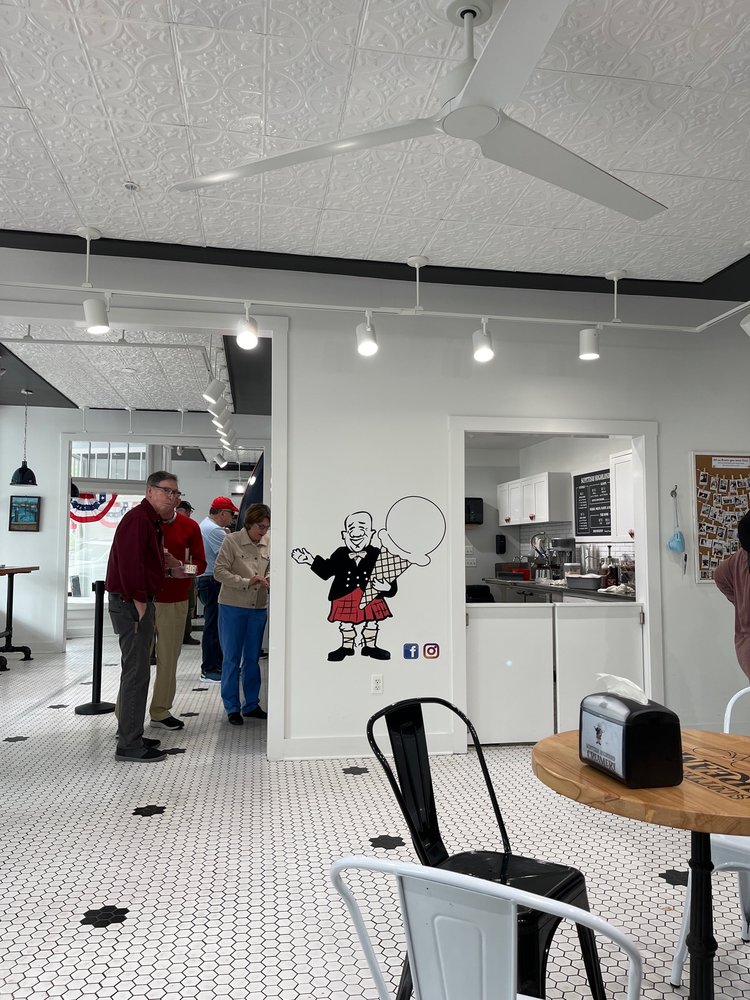
Scottish Highland Creamery, on Town Creek, is a nationally recognized ice cream shop and the town's default summer gathering point — the line is part of the experience. Doc's Sunset Grille delivers exactly what the name promises: dockside casual dining on the Tred Avon, outdoor seating, steamed crabs, and sunsets. Robert Morris Inn, dating to 1710 and among the oldest inns in America, handles the fine-dining end with elevated Chesapeake cuisine, tavern dining, and historic lodging. Pope's Tavern at The Oxford Inn is the cozy neighborhood option — handmade pastas, seafood, and a genuinely good cocktail lounge.
For everything else, Oxford Market & Deli is the general store, full-service deli, and de facto community bulletin board — sandwiches, essentials, local produce, coffee. Retail runs to boutiques and galleries along Morris Street: The Treasure Chest, maritime art, and antiques at Oxford Vintage & Trade.
The practical takeaway for buyers: groceries beyond the basics, chain pharmacy, hardware, and general shopping mean a trip to Easton. Most Oxford residents build one weekly Easton run into their routine and stop thinking about it.
Daily life here is organized around water and open space rather than facilities.
Oxford Town Park, on South Morris Street right at the water, offers shaded lawn, picnic tables, a playground, and the best free seats for Tred Avon sailboat racing. Oxford Conservation Park is the larger asset — 86 acres of protected wetland along MD-333 with crushed-gravel walking and biking trails, birdwatching blinds, and viewing platforms through native marsh and meadow. Mears Park and the town beach provide small public sand access along the Tred Avon and Town Creek basin, well suited to launching paddleboards and kayaks.
Oxford is also, quietly, an excellent cycling town. Flat terrain, very low traffic volume, and short distances mean kids and adults genuinely commute across the peninsula by bike — something that shapes how families here operate day to day.
The Oxford Community Center carries the cultural load: seasonal concerts, lectures, fitness classes, and live theater from the Tred Avon Players. For a town of 700, the programming calendar is disproportionately full.
Oxford residents are served by Talbot County Public Schools, consistently among the stronger public districts on Maryland's Eastern Shore. Because Oxford has no school buildings of its own, students commute roughly 8 to 12 miles north.
Level | Assigned School | Distance & Notes |
|---|---|---|
Elementary (PK–5) | White Marsh Elementary | ~8 miles north near the Trappe/Easton line. Small class sizes, strong community involvement. |
Middle (6–8) | Easton Middle School | ~11 miles north in Easton. STEM tracks, athletics, fine arts. |
High (9–12) | Easton High School | ~11 miles north in Easton. AP coursework, career and technical pathways, competitive athletics. |
Private and independent options are all in Easton as well: Saints Peter & Paul School (PreK–12, Catholic), The Country School (K–8, independent and academically rigorous), and Chesapeake Christian School (PreK–12).
Families should factor the commute honestly. It's a manageable drive, but it means bus rides for younger students and a real logistical consideration for after-school activities and athletics.
Oxford's tax rates are reasonable by Maryland standards. The rest of the carrying cost is where waterfront and historic ownership gets expensive, and this is the part buyers most often model incorrectly.
Property taxes. Talbot County's base real property rate runs about $0.76 per $100 of assessed value. The Town of Oxford layers a municipal rate of roughly $0.30–$0.33 per $100 on top to fund local police, water and sewer, and town services. On a median $1.2M home, expect a combined annual bill in the $11,500 to $13,500 range.
Flood insurance. Properties in Zone AE — a Special Flood Hazard Area covering much of the Town Creek and Tred Avon frontage — typically carry mandatory flood policies. Premiums range from $2,500 to $8,000+ annually, driven heavily by foundation type (pilings versus crawl space) and finished-floor elevation relative to Base Flood Elevation. An elevation certificate is the single most valuable document you can obtain during due diligence.
Marine and shoreline maintenance. Docks and boat lifts need annual attention — pilings inspection, winter ice protection, electrical — running $1,500 to $4,000 per year. Erosion protection is the bigger number: riprap and bulkhead maintenance arrives as periodic capital outlay, with bulkhead replacement running roughly $150 to $300+ per linear foot. On a property with 200 feet of frontage, that's a project, not a repair.
Historic maintenance. Exterior work on 18th- and 19th-century homes in the Historic District must meet Historic Commission guidelines. That means custom millwork, historic paint palettes, and tradespeople who specialize in period work — all of which cost more and schedule further out than standard contracting.
Add it up and a waterfront historic home in Oxford can carry annual holding costs well beyond the mortgage. It's entirely manageable when you plan for it, and a genuine shock when you don't.
Oxford is a specific place, and it rewards a specific buyer.
It works exceptionally well for retirees and second-home buyers who want a peaceful, low-crime, highly walkable village with real community depth and centuries of history embedded in the streetscape. It works for serious boaters and sailors who need immediate deep-water access, working boatyards within the town limits, protected mooring options, and an active racing culture on the Tred Avon. And it works for remote executives and creatives looking for genuine quiet within a 1.5 to 2 hour drive of Washington, Baltimore, and Annapolis.
It works less well for buyers who want nightlife, retail variety, or a school campus their kids can walk to. If those matter, Easton offers commercial convenience with far more housing inventory, and St. Michaels offers higher tourism energy and a busier social calendar at comparable waterfront price points. Both are close enough that plenty of buyers tour all three before deciding — and there's no wrong answer, only a right fit.
Buying in Oxford means competing for a very small number of homes, and the details that decide whether a property is right — water depth at your pier, elevation above base flood, what the Historic Commission will and won't approve, which lots have viable perc — aren't in the listing description. That's the work we do.
Chesapeake Bay Properties, led by Brian Gearhart, has spent years representing buyers and sellers across Talbot County and the wider Eastern Shore, from Oxford's Strand to Trappe's farmettes to Easton's in-town neighborhoods. Brian has lived on the Eastern Shore since 1983, and the team's local knowledge extends past the transaction to the contractors, marine trades, surveyors, and inspectors who make waterfront and historic ownership actually work.
Whether you're looking for a deep-water estate on the Tred Avon, a restored cottage on Morris Street, or a low-maintenance inland home within walking distance of the harbor, we'd welcome the conversation — including the honest version, if Oxford turns out not to be the right fit.
Chesapeake Bay Properties
31 Goldsborough St, Easton, MD 21601
(410) 310-5179
There's plenty to do around Oxford, including shopping, dining, nightlife, parks, and more. Data provided by Walk Score and Yelp.
Explore popular things to do in the area, including Oxford Market, Scottish Highland Creamery, and Oxford Social.
| Name | Category | Distance | Reviews |
Ratings by
Yelp
|
|---|---|---|---|---|
| Dining · $ | 2.37 miles | 7 reviews | 4/5 stars | |
| Dining · $ | 2.38 miles | 107 reviews | 4.6/5 stars | |
| Dining | 2.4 miles | 12 reviews | 4.9/5 stars | |
| Dining · $$ | 2.47 miles | 126 reviews | 4/5 stars | |
| Shopping | 2.39 miles | 5 reviews | 4.6/5 stars | |
| Active | 2.18 miles | 1 review | 1/5 stars | |
| Active | 2.45 miles | 14 reviews | 4.4/5 stars | |
| Active | 2.57 miles | 53 reviews | 4.4/5 stars | |
| Beauty | 2.27 miles | 0 reviews | 0/5 stars | |
|
|
||||
|
|
||||
|
|
||||
|
|
||||
|
|
||||
|
|
Oxford has 585 households, with an average household size of 2.04. Data provided by the U.S. Census Bureau. Here’s what the people living in Oxford do for work — and how long it takes them to get there. Data provided by the U.S. Census Bureau. 1,195 people call Oxford home. The population density is 108 and the largest age group is Data provided by the U.S. Census Bureau.
Total Population
Population Density Population Density This is the number of people per square mile in a neighborhood.
Median Age
Men vs Women
Population by Age Group
0-9 Years
10-17 Years
18-24 Years
25-64 Years
65-74 Years
75+ Years
Education Level
Total Households
Average Household Size
Average individual Income
Households with Children
With Children:
Without Children:
Blue vs White Collar Workers
Blue Collar:
White Collar:
Find Your Perfect Lifestyle
31 Goldsborough St Easton, MD 21601
31 Goldsborough St Easton, MD 21601