Search "homes for sale in Trappe MD" and you will land on a page advertising a bark park, a pickleball court, and homes starting in the upper $300s. Scroll further and you will find a nine-bedroom estate on Island Creek asking $8.75 million. Both are technically the same zip code. Neither one is what most portals mean when they hand you a single median price for the town.
That number is not just rounded. It combines three different housing markets, and the tier that shows up first in most searches, new construction at Lakeside at Trappe, has faced wastewater capacity limits during its build-out.
The number nobody agrees on
Ask two sources what a home in Trappe costs and you will get two different answers, and not because anyone is wrong. As of August 2026, Movoto's listing data put the median list price in Trappe at $459,000 to $460,000, or roughly $213 per square foot, up about 10 percent year over year. Zillow's broader home value estimate for the same window landed lower, at an average of $441,616, up a modest 0.7 percent over the past year. Neither figure resembles what a waterfront buyer on the Choptank is actually paying, because waterfront estates barely register in a median calculation built mostly from new-construction volume.
The gap between a 10 percent year-over-year jump in list prices and a 0.7 percent crawl in average value is not a data error. It is what happens when a fast-moving new-construction tier and a nearly flat legacy tier get folded into one town-level statistic. Read separately, each number tells you something useful. Averaged together, they tell you almost nothing about what your money actually buys.
Three tiers, one town
Homes in Trappe fall into three categories that behave nothing alike:
| Tier | Typical range | What defines it |
|---|---|---|
| New construction (Lakeside at Trappe) | Townhomes from the upper $300s; single-family from the $400s | Built by Lennar and Brookfield Residential, HOA fees near $87 a month, resort-style amenities including a pool, fitness room, and multi-sport court |
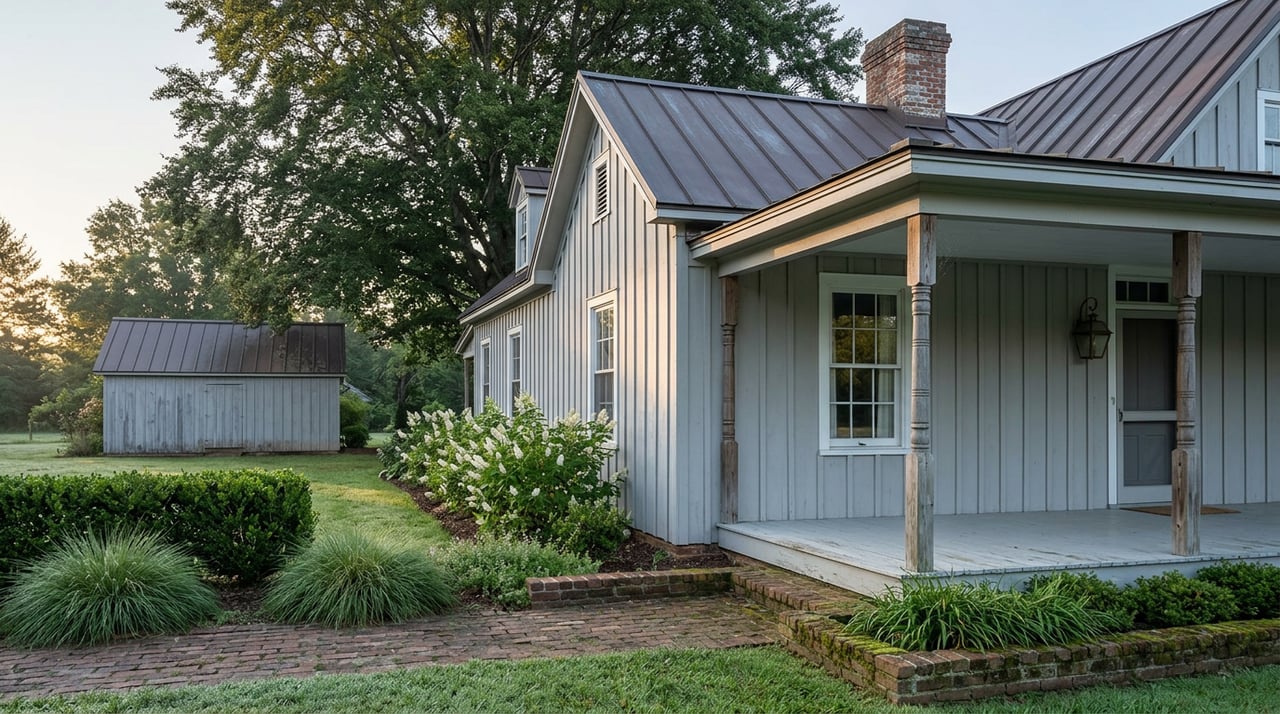
| Historic in-town core | Roughly $300,000 to $450,000 | Victorian and farmhouse character along Main Street and side streets, lots from a half acre to a full acre |
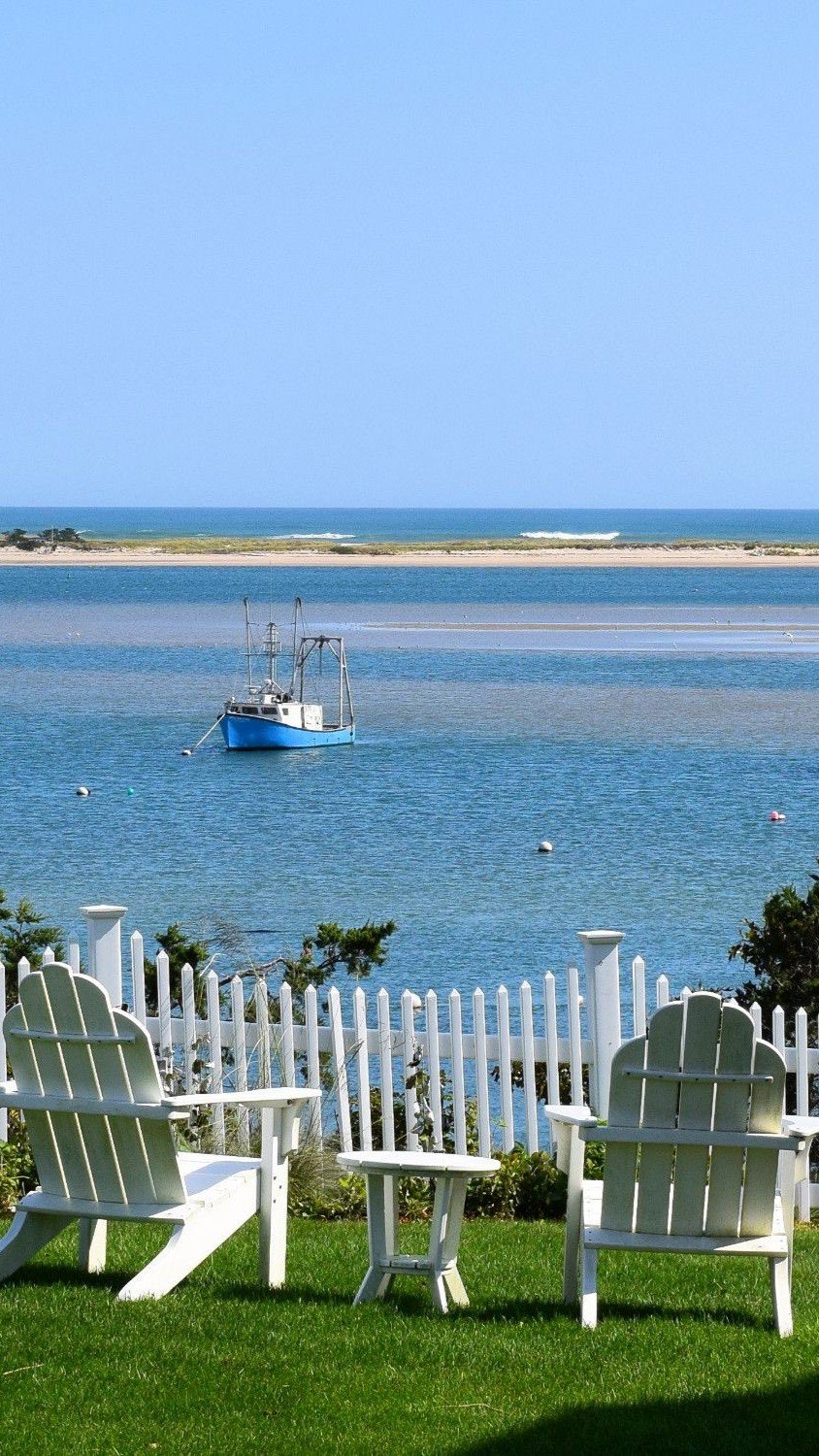
| Waterfront legacy estates | Into the multi-millions | Deepwater access on the Choptank River or Island Creek, private docks, significant acreage |
As of mid-August 2026, active listings illustrated the spread directly. A three-bedroom house on Beaver Dam Road was listed at $499,999. A four-bedroom, five-bath house on Baildon Road, just under 3,600 square feet, was priced at $2.895 million. Two companion waterfront properties on Southside Island Creek Road, each around 9,500 square feet, were listed at $5.995 million and $8.75 million. That kind of range inside one small town is unusual on the Mid-Shore, where most towns lean toward one category or another.
Wastewater capacity and Lakeside's build-out
Lakeside at Trappe is a 2,501-unit master-planned community on more than 850 acres off Route 50, first proposed more than two decades ago. It is the tier most search traffic finds first, and its development history helps explain why buyers should ask about sewer allocation.
For years, the project's build-out was constrained by a simple fact: the town's existing wastewater treatment plant could only handle the development's first 120 homes, and it was running on biological nutrient removal technology rather than the enhanced nutrient removal standard now typical for new plants. Lakeside's developers built a separate plant to take over that flow. The Maryland Department of the Environment originally received a request to permit 540,000 gallons of treated wastewater discharge per day. After sustained public comment, much of it organized by the Chesapeake Bay Foundation, the agency scaled that back to an initial annual average of 100,000 gallons a day.
As The Star Democrat reported, Choptank Riverkeeper Matt Pluta, who tracks water quality for ShoreRivers, said the new plant represents a real improvement over the aging facility it replaces.
"The wastewater will be treated to a cleaner standard. That's what we want to see. We support that."
His group's remaining concern was never the treatment level. It was the discharge method: spraying the treated water onto farm fields near Trappe Creek and Miles Creek, inside the Chesapeake Bay watershed. Talbot County eventually passed Resolution 338, amending its comprehensive water and sewer plan to require county sign-off before any future expansion of the new plant, over the objection of Trappe's own town council. Council President Brian Schmidt argued at the time that the county was treating Trappe differently than other towns and slowing its ability to manage its own growth. The Star Democrat quoted him as saying:
"We did not ask this council to intervene."
By 2024, local reporting confirmed the Lakeside plant was built and operating, with ownership transfer to the town underway. That is good news for anyone shopping there today. It is also a reminder that the phase you are looking at, and the sewer allocation tied to it, is worth a direct question before you get attached to a floor plan.
What this means if you are comparing towns
If new construction is what draws you to Trappe, the practical move is to ask which phase a listing sits in and whether its sewer allocation has already cleared, rather than assuming every lot in the community is equally ready to close. A community that took two decades to get its first shovels in the ground is not going to move at a Sunbelt pace, and that is fine, but it changes how you plan a timeline.
If the historic core is what draws you, the due diligence looks different. These are older homes on larger lots, and buyers should confirm whether a given property sits on public water and sewer or relies on a private well and septic system, since that answer varies block by block in a town this size.
If you are looking at the waterfront tier, the questions shift again, toward shoreline permitting, dock condition, and easement history rather than HOA fees or construction schedules. None of that shows up in a median price, and none of it should be assumed from one.
The town underneath the three tiers
None of this changes what makes Trappe worth a look in the first place. The historic core still centers on a walkable Main Street lined with restored Victorian houses, anchored by the Rural Life Museum of Trappe, a living heritage site built from relocated original structures including a carriage house and the Slaughter Smokehouse. Trappe has also been identified by Patch as the fastest-growing town in Maryland, a distinction that tracks with what the three-tier market shows: real demand pulling in three different directions at once, not one direction pretending to be simple.
Is Trappe still growing, or was that a pandemic-era spike? Patch has identified Trappe as Maryland's fastest-growing town, and that growth is showing up across all three tiers, not just new construction, which suggests it is broader than a short-term surge.
Will Lakeside's amenities be finished by the time I move in? Ask your agent which phase a specific listing belongs to. Earlier phases have more established amenities and confirmed sewer capacity. Later phases depend on continued build-out, so confirm timing for the specific phase.
Are historic in-town homes on public sewer or septic? It varies by street and by how old the home is. Confirm this directly for any specific property rather than assuming based on the neighborhood.
A single median price will never tell you which of these three markets you are actually shopping in. If you want a straight read on what a specific Trappe listing is really offering, from sewer allocation to shoreline rights, Chesapeake Bay Properties can walk you through it. Schedule a Call when you are ready to look past the number and into the property.
This article is general information, not legal, tax or financial advice. Consult a qualified professional about your situation.